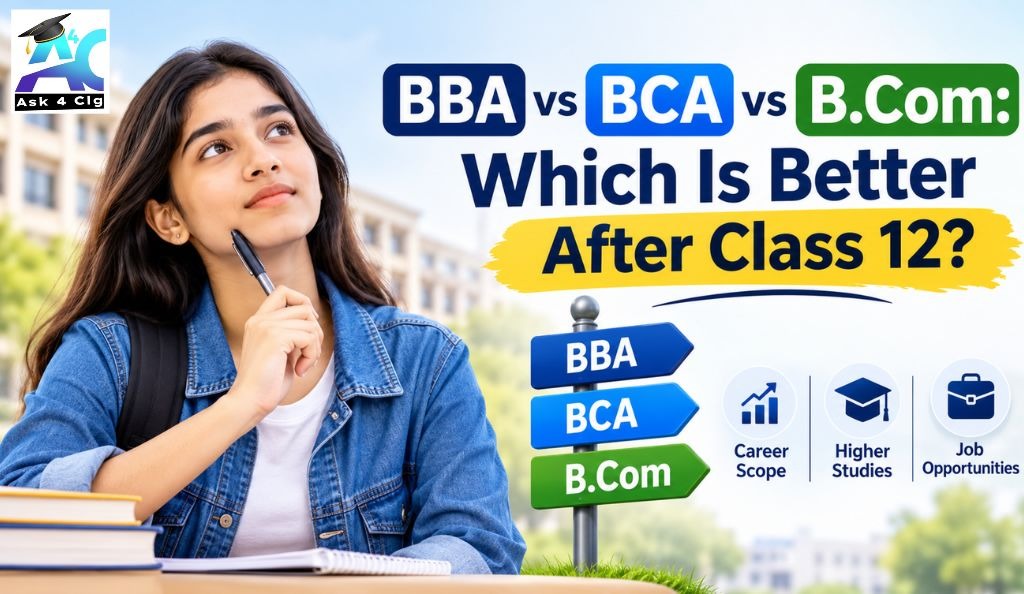
Choosing between courses after Class 12 feels more confusing than the board examinations.
Someone suggested BBA because management careers offer good growth. A teacher recommends BCA because technology is expanding. Your family prefers B.Com because it opens the door to banking.
So, when comparing the courses, the real question is which one gives you the right foundation for the career you actually want to pursue.
Let’s compare BBA vs BCA vs B.Com, eligibility, career opportunities, salary prospects and long-term growth.
BBA vs BCA vs B.Com: Understanding the Basic Difference
Before jumping straight into career opportunities, let’s understand what these three degrees actually focus on.
- BBA (Bachelor of Business Administration): Focuses on business management, marketing, finance, human resources and organisational operations.
- BCA (Bachelor of Computer Applications): Focuses on computer applications, programming, software development, databases and IT-related concepts.
- B.Com (Bachelor of Commerce): Focuses on accounting, taxation, economics, finance, business law and commerce-related subjects.
Understanding these distinctions becomes important when you start choosing a course based on your interests and postgraduate career.
Course Comparison of BBA vs BCA vs B.Com After 12th
Here’s a quick comparison between BBA vs BCA vs B.Com:
| Comparison Factor | BBA | BCA | B.Com |
| Full Form | Bachelor of Business Administration | Bachelor of Computer Applications | Bachelor of Commerce |
| Main Focus | Business and management | IT and computer applications | Commerce and finance |
| Duration | Usually 3-4 years | Usually 3-4 years | Usually 3-4 years |
| Core Subjects | Marketing, HR, Finance, Management | Programming, DBMS, Networking, Mathematics | Accounting, Taxation, Economics, Business Law |
| Key Skills | Communication, leadership, decision-making | Programming, logical thinking, problem-solving | Financial analysis, accounting, numerical skills |
| Popular Career Paths | Marketing, HR, Business Development | Software Development, IT, Data-related roles | Accounting, Banking, Finance, Taxation |
| Higher Studies | MBA, PGDM, specialised master’s | MCA, MSc IT, specialised master’s | M.Com, MBA, CA, CMA, CS |
What Are BBA, BCA and B.Com Career Scope and Salary?
This is probably the biggest question students and parents have. The honest answer is that a degree alone does not determine the salary.
The following figures are broad indicative estimates for entry-level roles in India, not guaranteed placement packages.
| Course | Common Entry-Level Roles | Indicative Annual Salary |
| BBA | Marketing Executive, HR Executive, Business Development Executive | ₹2.5-4.5 LPA |
| BCA | Junior Developer, Web Developer, Software Tester | ₹2.5-5 LPA |
| B.Com | Accountant, Accounts Executive, Tax Assistant | ₹2-4 LPA |
So, Which Is Better BBA, BCA or B.Com?
No course is better than another. For better understanding, let’s consider three students.
Student A wants to become a business manager or plans to run their own business. They enjoy understanding business operations, marketing and communication. BBA admission offers a relevant starting point for them because its curriculum focuses on these areas.
Student B enjoys technology and software applications. Computers, logical challenges and programming are their thing. BCA admission provides a more direct academic foundation for their interests.
Student C wants to become a financial professional. They enjoy accounting, taxation and financial subjects. B.Com is a natural choice for those who consider CA or a career in banking.
Which Is the Best Course After 12th for Commerce Students?
Commerce students can choose from several undergraduate courses after Class 12, depending on their interests and career goals. B.Com is suitable for accounting, banking and finance. BBA for business management and entrepreneurship.
Other options include BA Economics, BMS, and professional courses such as CA, CMA and CS. The best choice depends on your preferred career path, academic strengths and long-term goals.
We also have a detailed guide on the best courses after Class 12 for commerce students.
Final Verdict
There is no single course that is better for every student. The right choice depends on what you enjoy learning, what kind of work you see yourself doing and how you plan to build your career.
Take time to understand the curriculum, compare colleges and evaluate future opportunities. A well-informed decision now can give you a much stronger foundation for the years ahead.
If you are still confused about which course or college to choose after 12th, get in touch with Ask4clg and discover admission opportunities across India. Make your next academic decision with clarity.
Frequently Asked Questions (FAQs)
What is the main difference between BBA, BCA, and B.Com?
BBA focuses on business management, marketing and administration. BCA covers computer applications, programming and IT, while B.Com concentrates on accounting, finance, taxation and commerce.
Which course is better after Class 12: BBA, BCA, or B.Com?
The best course depends on your career goals. Choose BBA for management, BCA for technology and software development and B.Com for accounting, banking and finance careers.
Can Arts or Science students apply for BBA, BCA, and B.Com?
Yes. Many universities accept Arts and Science students for BBA, BCA and B.Com. However, each stream might require different subject eligibility.
Is Mathematics required for BBA, BCA, or B.Com admission?
Mathematics is not universally compulsory for these courses. However, some universities require it for BCA admission, while BBA and B.Com requirements depend on the institution and programme.
Which course is best for a career in IT: BBA, BCA, or B.Com?
BCA is generally the most suitable choice for students interested in IT careers, as it covers programming, software development, databases and computer applications.
Which course is best for accounting, banking, and finance careers?
B.Com is the most relevant choice because it covers accounting, taxation, financial management and commerce. It also provides a useful foundation for professional qualifications like CA and CMA.
Is BBA better than B.Com for MBA admission?
Neither degree has a universal advantage for MBA admission. Both BBA and B.Com graduates can apply for MBA programmes. They must meet specific university eligibility and entrance examination requirements.
What are the career options after BBA, BCA, and B.Com?
BBA graduates can explore marketing, HR, business development and management roles. BCA graduates can pursue software development, web development and IT roles, while B.Com graduates can explore accounting, taxation, banking and finance.
Which course has better salary scope: BBA, BCA, or B.Com?
All three offer opportunities for salary growth. BCA can lead to well-paying technical roles, BBA to management positions and B.Com to specialised finance and accounting careers. Skills and experience largely influence earning potential.
How can Ask4Clg help me choose between BBA, BCA, and B.Com?
Ask4Clg helps students explore undergraduate courses, compare college options and understand admission opportunities. It can make the process of finding a suitable college and course after Class 12 easier and more informed.
Related Posts
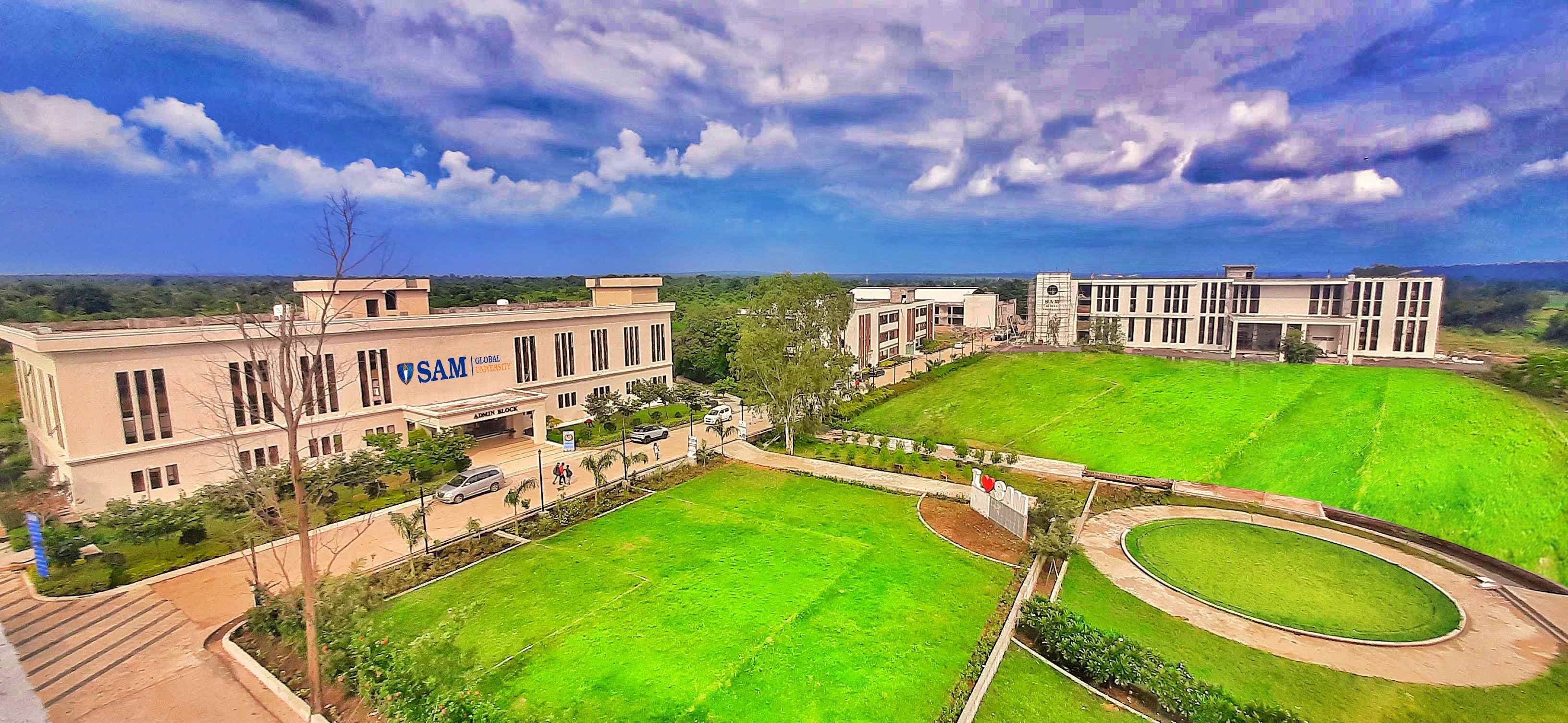
Sam College of Engineering and Technology Admission 2024: Dates, Fees, Eligibility, Selection Criteria
The institute offers BE and Diploma programs in Engineering at the undergraduate level for a duration of 4 years and 3 years respectively. The intake for BE and Diploma programs is 60 seats per course, with the only exception being Mechanical Engineering which admits 120 students per year.SAM College of Engineering and Technology (SAMCET) is a reputed college of the SAM Group. It is located in the state of Madhya Pradesh. It provides various professional courses like BE, Diploma, M.Tech, MCA, and MBA.Direct Link to Apply for SAMCET Admission Admission to BE is conducted on the basis of the results of the Pre-engineering test
Read More
SSN College of Engineering (SSNCE) Admission 2024: Eligibility, Selection Criteria, Admission Process
SSN College of Engineering (SSNCE), established in 1996, is an engineering college located in Chennai, Tamil Nadu. It is affiliated to Anna University. SSNCE is the one engineering college under the USN chain of institutions. SSN College of Engineering offers B.Tech and M.Tech programs in full-time mode. Candidates seeking admission will have to fill the online application form available at the official website of the institute. The application fee is INR 1250/- for all the programs. Admission to both programs are done based on merit of the qualifying examination. The admission test scores decide whether the candidate receives the scholarship or not.
Read More
Sagar Institute of Science and Technology (SISTEC), Bhopal Admission 2024: B.Tech, M.Tech, MBA
Sagar Institute of Science and Technology (SISTec) is a premier engineering and management institute located in Bhopal, Madhya Pradesh. It was established in the year 2001 and it is affiliated to Rajiv Gandhi Proudoyogiki Vishwavidyalya (RGPV).Sagar Institute of Science and Technology offers B.Tech, M.Tech and MBA program in various specializations. Both online and offline mode of application is acceptable for M. Tech, MBA courses.Candidates securing a minimum of 45% in PCM/B at 10+2 level are eligible to apply for B. Tech and B. Pharm programs.Candidates with minimum aggregate marks of 45% in the relevant/any discipline at graduation level are eligible to apply
Read More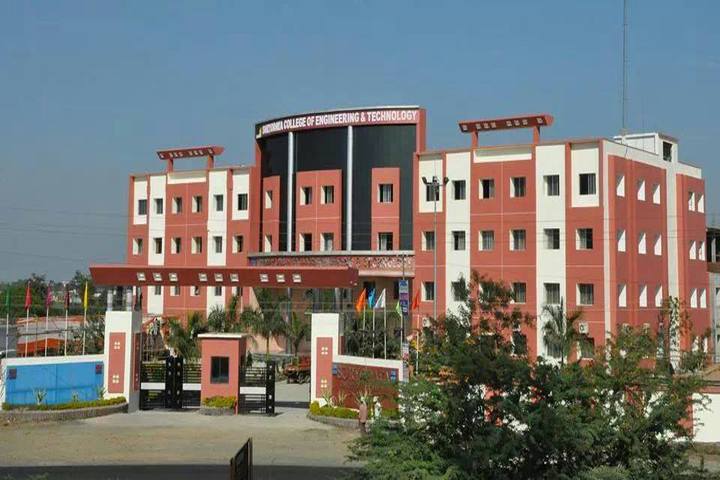
SCET Admission 2024: Cut Off, Fees, Entrance Exam
Sahrdaya College of Engineering and Technology is a private college affiliated with Calicut University that was established in 2002. Located in Thrissur, it is an ISO 9001:2015 certified college with a ‘B’ accreditation from NAAC and an ‘SIRO’ grading from DSIR.SCET has a distinguished faculty. There are 80 faculty members; out of them, 42 have a PhD. The institute offers state-of-the-art infrastructure. SCET offers four courses: B.Tech, B.Tech (lateral), M.Tech, and PhD. There are six specializations under the B.Tech course. To qualify for B.Tech, a candidate needs to have passed 10+2 with PCM. For selection, they need to take the KEAM
Read More
Sai Vidya Institute of Technology Admission 2024: Cut Off, Fees, Application Form, Eligibility
Sai Vidya Institute of Technology (SVIT) is a reputed educational institution imparting quality education in the fields of Engineering and Management. It was established in 2008 by Sri Sai Vidya Vikas Shikshana Samithi. The institute is affiliated with Visvesvarya Technological University (VTU), Belagavi. It is located in Bangalore, Karnataka.Sai Vidya Institute of Technology offers various UG and PG degree courses in the field of engineering along with an MBA program with 3 management disciplines. All courses offered by the institute are approved by AICTE, New Delhi and recognized by UGC.Engineering Diploma holders with 45% minimum marks may seek admission to B.E. 3rd semester
Read More